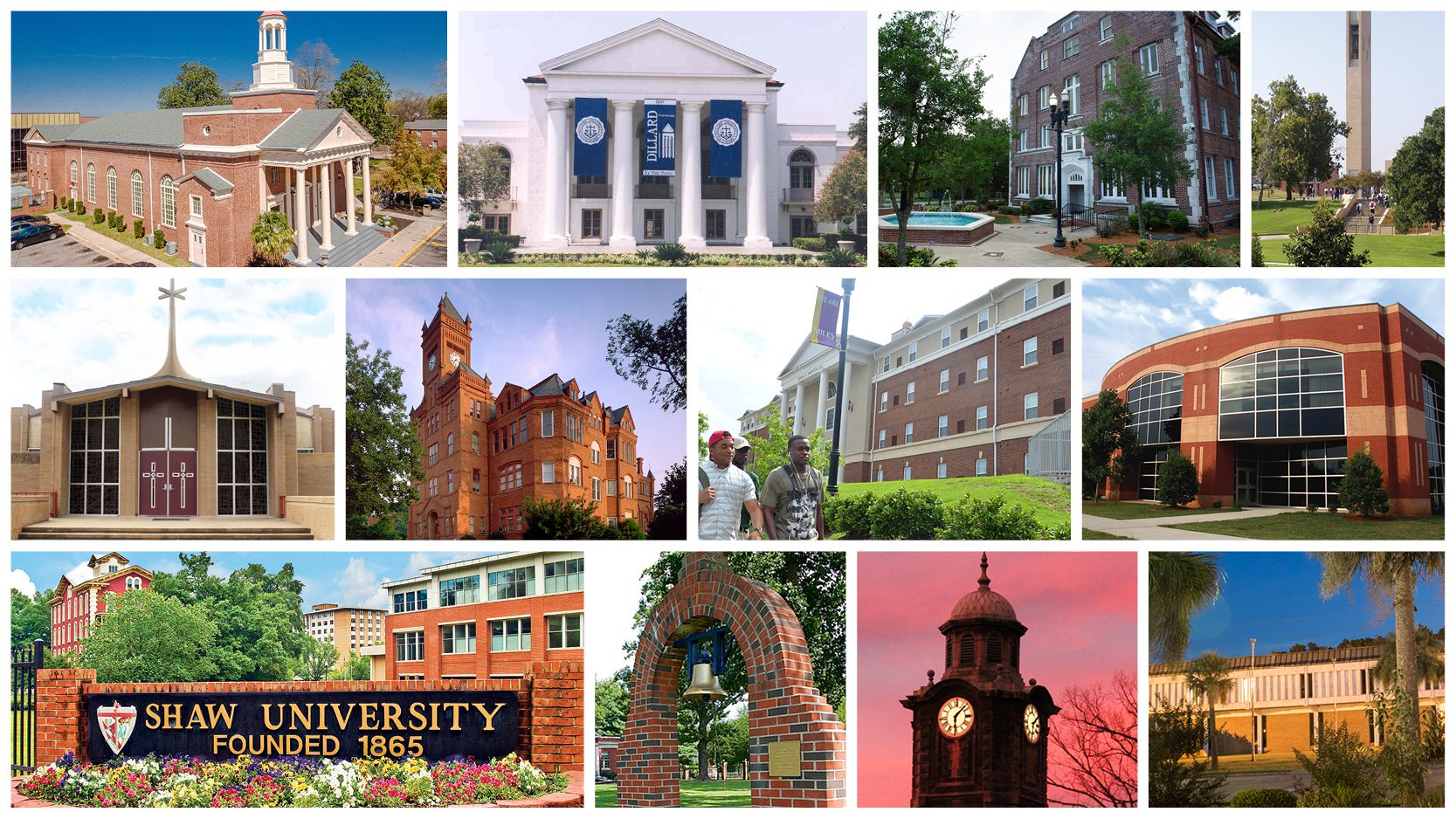
Historic investment from the James and Judith K. Dimon Foundation will provide $1 million in permanent endowment capital to each of 12 HBCUs.
WASHINGTON (HBCU Times) | The UNCF $12 Million HBCU Gift from the James and Judith K. Dimon Foundation will provide permanent endowment funding to 12 historically Black colleges and universities.
Announced Aug. 20, the investment will provide $1 million in permanent endowment capital to each of 12 UNCF member HBCUs through the newly established Dimon Fund to Advance Economic Opportunity.
The gift is part of UNCF’s $1.5 billion capital campaign and is designed to help participating institutions strengthen their financial foundations, expand long-term planning and support academic, research and infrastructure priorities.
Which HBCUs Will Receive the UNCF $12 Million HBCU Gift?
The 12 institutions receiving $1 million each are:
Benedict College in Columbia, South Carolina; Dillard University in New Orleans; Edward Waters University in Jacksonville, Florida; Huston-Tillotson University in Austin, Texas; Jarvis Christian University in Hawkins, Texas; Johnson C. Smith University in Charlotte, North Carolina; Miles College in Fairfield, Alabama; Oakwood University in Huntsville, Alabama; Shaw University in Raleigh, North Carolina; Stillman College in Tuscaloosa, Alabama; Tuskegee University in Tuskegee, Alabama; and Voorhees University in Denmark, South Carolina.
The institutions were selected based on leadership, governance and their record of preparing students for careers in education, nursing and other healthcare fields. UNCF said several of the schools also participate in cross-institutional partnerships that allow students to transfer credits in health-related disciplines and move more efficiently from college into the workforce.
Why Permanent Endowment Funding Matters
Unlike a grant designed to support one program or one academic year, endowment funding is intended to create long-term financial strength.
UNCF said the Dimon Fund will help participating HBCUs strengthen institutional balance sheets, improve their ability to plan for the future and expand capacity for academics, research and infrastructure.
For HBCUs, stronger endowments can provide greater flexibility to invest in student success, faculty, scholarships, campus improvements and other institutional priorities.
UNCF President and CEO Michael L. Lomax said strengthening institutions is central to expanding opportunity.
“Endowments create permanence. Permanence creates independence,” Lomax said.
He added that greater independence gives institutions the ability to innovate, lead and serve students for generations.
Investment Targets Education and Healthcare Pathways
The Dimon Foundation investment places particular emphasis on HBCUs that prepare educators, nurses and healthcare professionals.
UNCF said these are high-demand fields where HBCUs continue to produce strong outcomes for first-generation and underrepresented students.
Jamie Dimon, chairman and CEO of JPMorgan Chase & Co., and Judy Dimon, president of the Dimon Foundation, said HBCUs remain important pathways to economic opportunity.
“Our country’s future and strength depend on our young people,” Jamie and Judy Dimon said.
The couple said HBCUs continue to serve as a springboard for students pursuing greater educational and economic opportunity.
Building Stronger HBCUs for Future Generations
The $12 million gift advances one of the primary goals of UNCF’s broader capital campaign: increasing permanent endowment capital at its member institutions.
Johnnetta Betsch Cole, UNCF president-in-residence and co-chair of the capital campaign, called the gift both “a vote of confidence and a catalyst.”
Cole said strengthening endowments gives HBCUs greater capacity to make long-term decisions that benefit students, faculty and the communities they serve.
The investment comes at a time when HBCUs are balancing growing student demand with the need for stronger institutional resources.
For the 12 schools receiving funding, the impact could extend far beyond the initial $1 million award.
The goal is permanence.
And for HBCUs working to help more students enroll, persist and graduate, stronger institutions can mean greater capacity to support generations of students still to come.