

DURHAM, N.C. — North Carolina Central University is putting HBCUs at the center of the artificial intelligence conversation.
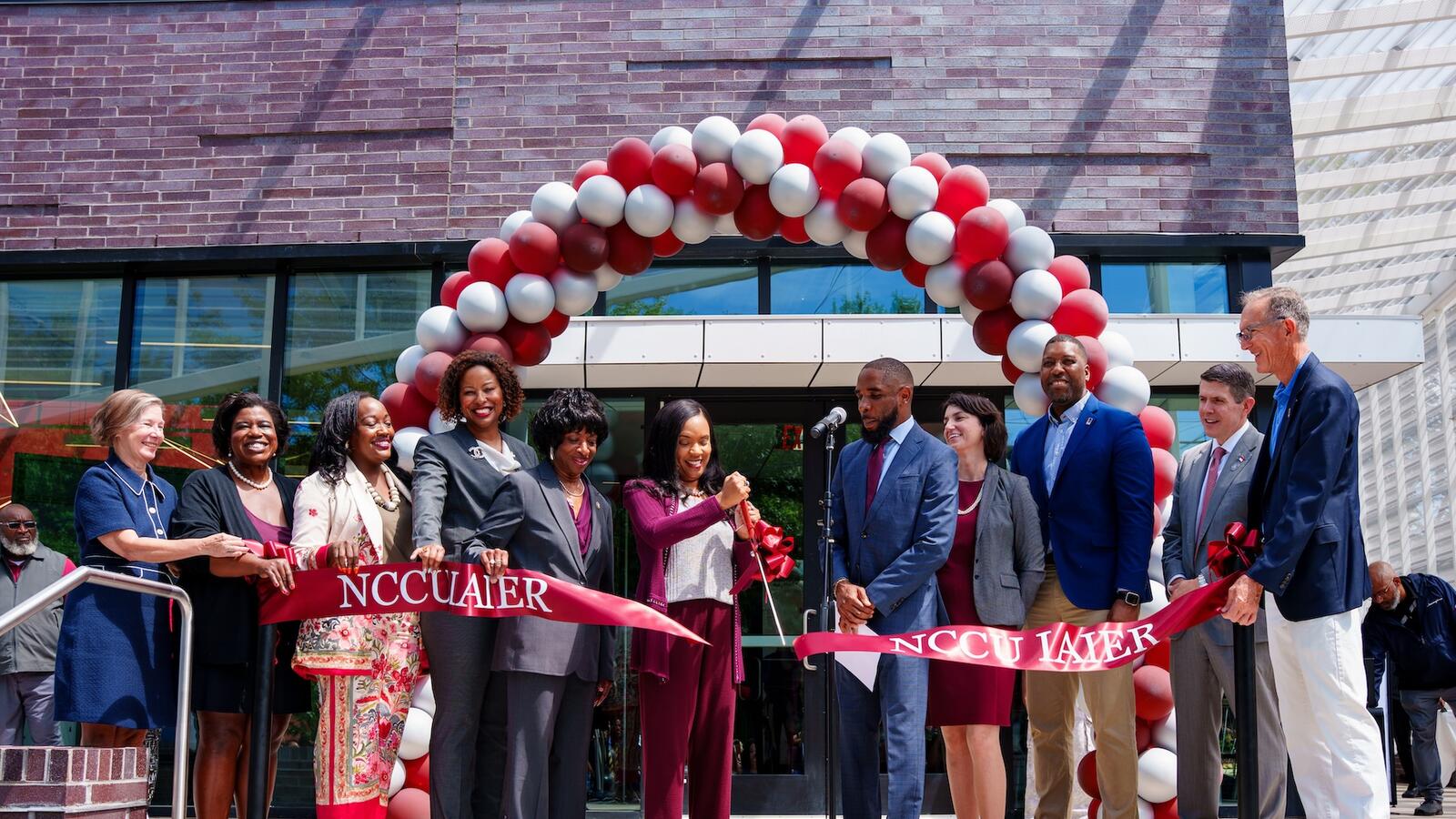
The university has opened a new building for the NCCU AI Institute, formally known as the Institute for Artificial Intelligence and Emerging Research, or IAIER. NCCU describes the institute as the first dedicated artificial intelligence institute established at a historically Black college or university.
The approximately 5,000-square-foot facility opened Aug. 10 at Fayetteville and Lawson streets in Durham. The $7.2 million project was funded through federal Title III funding and university trust funds, according to HBCU Gameday.
But the significance of the building extends beyond its size.
At a time when artificial intelligence is rapidly changing education, business, health care and the workforce, NCCU is creating a place where HBCU students and faculty can participate directly in the research and development shaping that future.
Inside the NCCU AI Institute
The new facility is designed as more than a traditional computer lab.
The building includes an AI Literacy Studio, Machine Learning and Data Science Studio, Robotics and Emerging Tech Lab, XR Innovation Sandbox, Ethics and Governance space and an Innovation Atrium.
Those spaces give students and faculty opportunities to explore artificial intelligence from several perspectives, including research, data science, robotics and the ethical questions surrounding emerging technology.
NCCU has also been incorporating AI education into the broader student experience.
Beginning in fall 2025, an AI component was added to the university’s required Introduction to University Education course for incoming freshmen. The university is also introducing an artificial intelligence minor through its Department of Mathematics and Physics.
The institute has established workforce development partnerships as well. Through a partnership with Google, students can pursue training and career certificates in areas including artificial intelligence, cybersecurity, data analytics and project management.
Dr. Siobahn Day Grady Leads NCCU’s AI Initiative
Leading the effort is founding director Dr. Siobahn Day Grady, an associate professor in NCCU’s School of Library and Information Sciences.
Her connection to HBCUs runs deep.
Grady earned her bachelor’s degree in computer science from Winston-Salem State University, a master’s degree in information science from North Carolina Central University and graduate degrees in computer science from North Carolina A&T State University.
Her academic and professional work has focused on areas including artificial intelligence, human-computer interaction, misinformation, algorithmic bias and autonomous systems.
At NCCU, Grady now leads an institute focused on advancing AI research and education while also considering how the technology affects people and communities.
The university formally approved the Institute for Artificial Intelligence and Emerging Research in December 2025 following an institutional review process. Its development began earlier, with $1 million in support from Google helping launch the initiative.
Preparing HBCU Students for an AI-Driven Workforce
The NCCU AI Institute arrives as colleges and universities face a much larger question: How should students prepare for a workforce increasingly influenced by artificial intelligence?
NCCU is approaching that question through both research and practical experience.
The institute has already created opportunities for students, faculty and staff through its AI Emerging Scholars and AI Emerging Leaders programs. Its inaugural cohort included 10 scholars and 10 leaders who spent the year exploring AI research, mentorship and real-world applications.
Projects have examined the use of artificial intelligence in areas ranging from health outcomes to music and app development.
The institute is also supporting faculty research through a seed grant program designed to encourage early-stage AI projects and interdisciplinary collaboration.
That work could become increasingly important as employers across industries look for graduates who understand not only how to use artificial intelligence tools, but also how to evaluate, develop and apply the technology responsibly.
Why an HBCU AI Institute Matters
NCCU’s investment carries significance beyond the Durham campus.
Artificial intelligence is influencing who gets hired, how businesses operate, how students learn and how decisions are made. Questions about access, bias and representation have also become part of the national discussion surrounding AI.
HBCUs having a role in that conversation matters.
NCCU’s institute creates another pathway for Black students, researchers and faculty to participate in the development of emerging technology rather than simply consume it.
The university has already expanded that conversation nationally. NCCU says IAIER has participated in research collaborations examining AI and the future of work and has helped create opportunities connecting students and faculty with research, internships and industry exposure.
NCCU has also hosted an AI summit for HBCUs in partnership with OpenAI Academy, bringing together students, faculty, industry leaders, policymakers and community members to discuss artificial intelligence, workforce readiness and the role HBCUs can play in emerging technology.
With a dedicated building now open, those efforts have a permanent home.
For NCCU, the goal is bigger than teaching students how to use the latest technology. It is positioning them to participate in determining where that technology goes next.
Source: Reporting from HBCU Gameday. Additional information verified through North Carolina Central University.

[…] Carolina Central University, for example, recently opened a building dedicated to its Institute for Artificial Intelligence and Emerging Research, another example of HBCUs investing in areas expected to shape the future […]