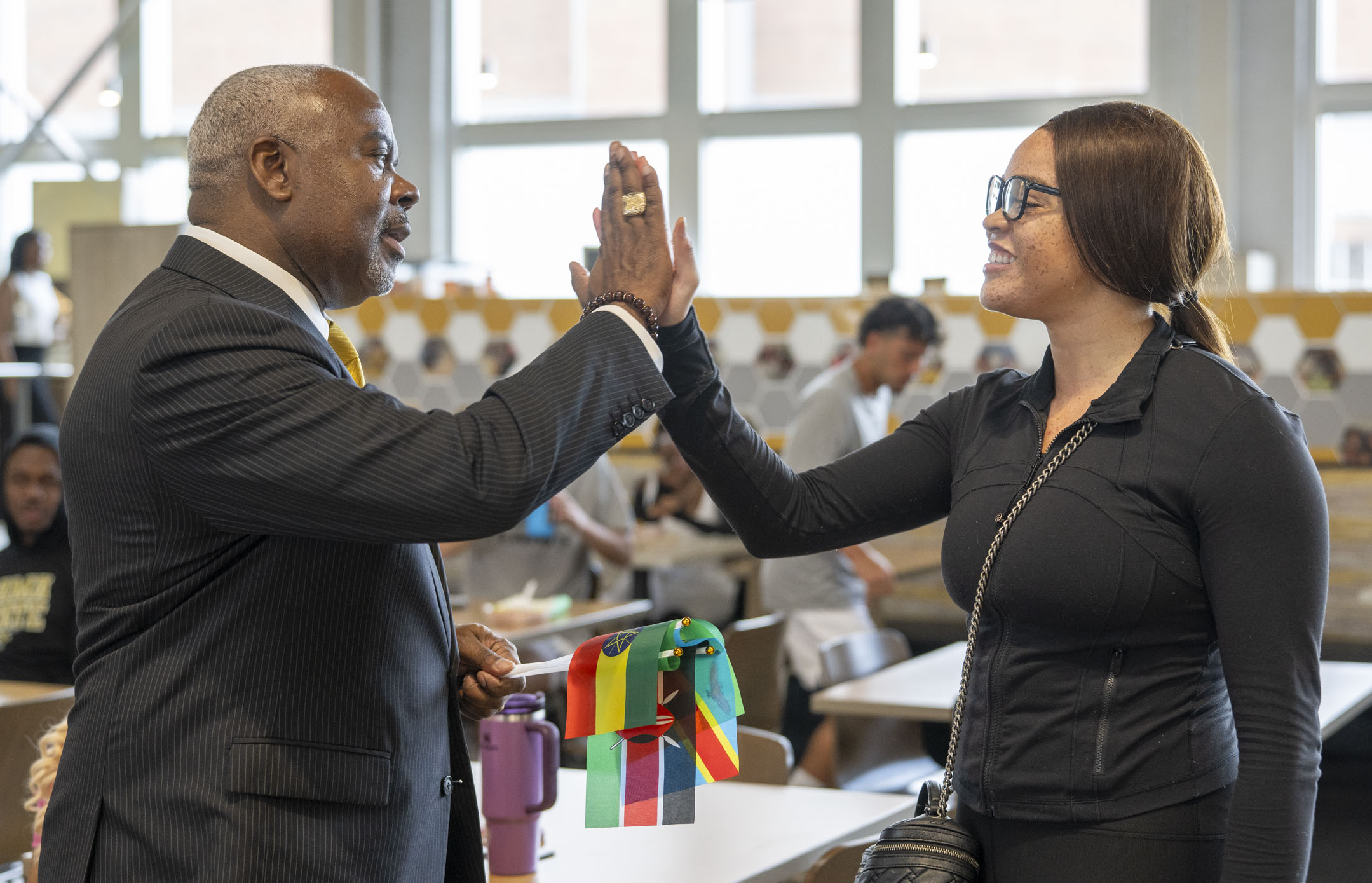
By Dr. Quinton T. Ross, Jr.
Within the walls of Historically Black Colleges and Universities (HBCUs), something sacred has always lived. It is not confined to brick, mortar, or campus gates. It is a spirit of access, advocacy, excellence, and unapologetic service to society.
HBCUs were born out of necessity during a time when opportunity was denied, yet they evolved into institutions that did far more than educate—we uplifted communities, cultivated leaders, and anchored hope. Today, as HBCUs face a rapidly changing social, economic, and educational landscape, our mission must be both rooted in history and bold in imagination.
At Alabama State University, we have chosen to imagine boldly. I often tell my Leadership Team, “We’ve got to go to know” and one of my assistant vice presidents adds “and grow” to that philosophy. We must engage directly with our community to truly understand its needs.
The Alabama State University Focus 2030 Strategic Plan is a forward-looking framework designed to position the university as a leader in teaching, research, and service providing lasting community impact. Not only is the institution focused and anchored in academic excellence and student success, central to this plan is the idea that ASU is not only an academic institution but also a community builder, committed to developing students as global change agents while creating meaningful societal impact.
One of the key anchors of our strategic plan is CommUniversity. It is not a slogan. It is a philosophy, a framework, and a call to action. The term is not new and has been featured in printed publications as early as the 1960s. With regard to historically Black colleges and universities, Killen (1969) called for a “Communiversity” that would shape Black communities and would serve as bridges to educate people of color from the cradle to the grave. Today, as a global institution, we affirm that the university does not exist apart from the community but with it, for it, and because of it. Within the walls of HBCUs, education has never been transactional. It has always been transformational. CommUniversity makes that truth visible, accountable, and sustainable.
As the 15th President of Alabama State University, I have witnessed firsthand what happens when academic excellence and community engagement are not parallel pursuits but deeply intertwined. CommUniversity positions the university as a living partner, one that listens just as much as it leads. It calls on faculty to connect teaching and research to real-world challenges, on students to see themselves as civic scholars, and on institutions to leverage their intellectual, cultural, and economic capital for the public good.
This approach is not new to HBCUs, but it is newly recognized.
Recently, Alabama State University was honored with a prestigious national acknowledgment as a Carnegie-designated Community Engagement Institution, a recognition reserved for universities that demonstrate deep, intentional, and measurable collaboration with their communities. This designation affirms what our alumni and neighbors have long known: ASU’s impact extends far beyond campus boundaries. It validates the labor of our faculty, staff, students, and community partners who believe that knowledge gains power when it is shared.
Yet, this moment is about more than one university. It is a moment for the broader HBCU community.
HBCUs are uniquely equipped to model what higher education must become. We know how to teach first-generation students not only to succeed academically but to lead ethically. We know how to conduct scholarship that honors lived experience. We know how to train students to conduct groundbreaking research. We know how to educate the whole person: mind, body, and spirit. And we know how to stand with communities during moments of crisis, transition, and growth.
CommUniversity challenges us to ask critical questions:
What does community engagement look like in an era of economic inequality and technological disruption?
How do we ensure our students graduate not only career-ready, but citizenship-ready?
How do our universities serve as engines of economic development without abandoning our moral compass?
At ASU, we have answered these questions with action through partnerships in education, healthcare, workforce development, civic leadership, and cultural preservation. Our students learn by doing, our faculty research with purpose, and our community partners help shape the work from inception to impact. This is reciprocal engagement, not performative outreach.
Within the walls of HBCUs, we must resist the temptation to measure success solely by enrollment numbers or endowments. Success must also be measured by lives improved, neighborhoods stabilized, policies influenced, and futures expanded. Community engagement is not ancillary to our mission; it is central to our legitimacy.
This is why CommUniversity is as much about identity as it is about strategy.
It reinforces who we are at our core: institutions created to democratize knowledge and dismantle barriers. It invites us to reimagine the relationship between higher education and society, especially at a time when trust in institutions is fragile and the need for credible, compassionate leadership is urgent.
To my colleagues across the HBCU landscape: this is our moment to lead with confidence and clarity. Our institutions are no longer asking for validation; we are demonstrating value. By formalizing and scaling what we have always done intuitively, we can influence national policy, reshape accreditation conversations, and redefine excellence in higher education.
The Carnegie Community Engagement recognition is not a finish line; it is a mirror reflecting our responsibility. It challenges us to deepen our commitments, document our outcomes, and ensure sustainability beyond leadership transitions. Most importantly, it reminds us that community engagement is dynamic. It evolves with the needs of the people we serve.
Within the walls of HBCUs live stories of resilience, brilliance, and collective uplift. CommUniversity asks us to open those walls wider, not to dilute our mission, but to amplify it. When universities and communities rise together, the result is not charity; it is shared power.
At Alabama State University, we are committed to that work. And as HBCUs, united by purpose and propelled by possibility, we are well positioned to teach the nation what it truly means to serve, to lead, and to belong.
The future of higher education will be shaped by institutions that understand this truth: education matters most when it belongs to the people.